









Our company has adopted the Toyota Production System (TPS), an organizational model focused on eliminating waste, optimizing production processes, and continuously improving business performance.
We operate according to the Kaizen philosophy, promoting continuous improvement through the active involvement of management, leadership, and operational staff. Daily on-site sharing of information, ideas, and non-conformity analyses is a key element of our management system.
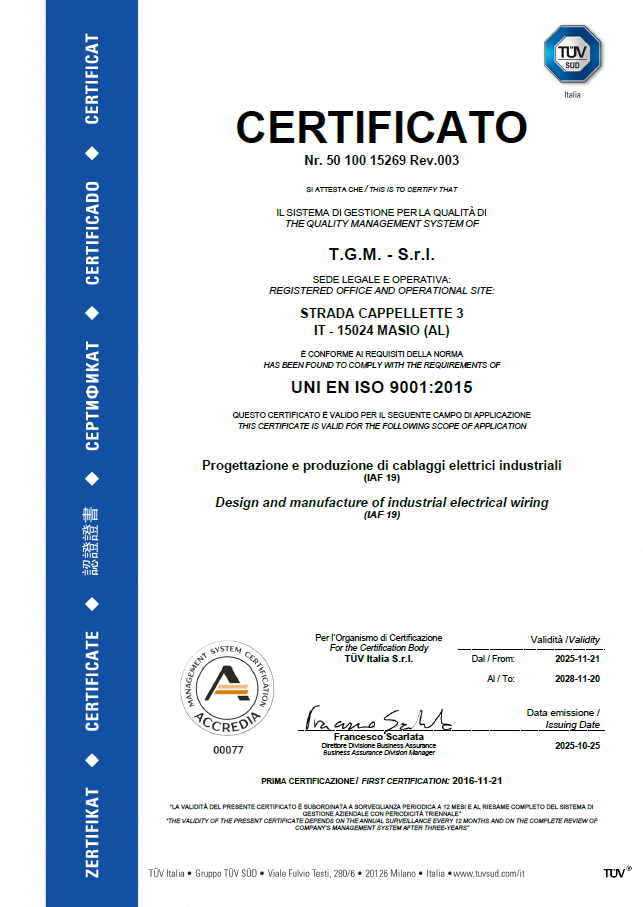
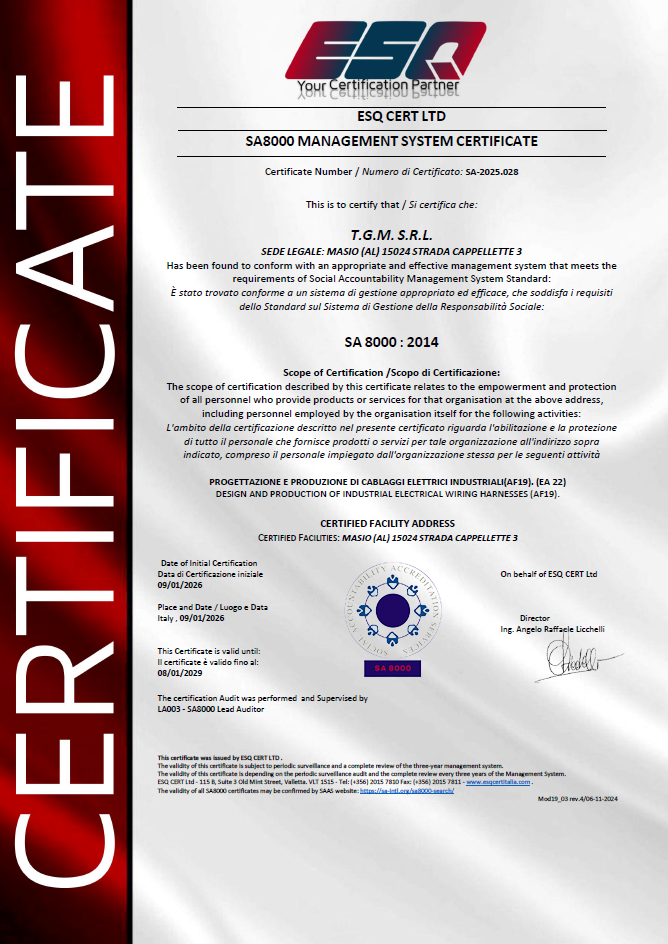
Our commitment is aimed at the constant refinement of business processes to ensure high standards of service quality, safety, and sustainability. The entire organization operates in compliance with major international standards:
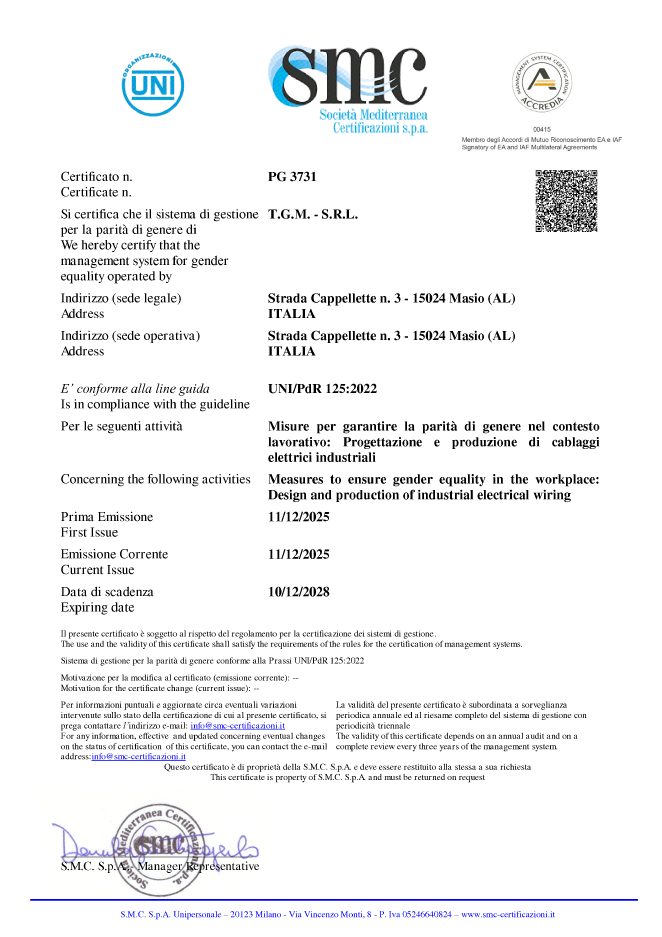
We are also engaged in the Gender Equality certification process according to UNI/PdR 125:2022, based on measurable KPIs and a structured management system.
To strategically operate in the USA and Canadian markets, in 2010 we obtained UL Certification issued by UL Solutions (File Number E342376), which can be verified in the official Online Certifications Directory.
Confirming our commitment to ESG and sustainability, we have participated in the EcoVadis program, earning a Bronze medal.
The Toyota Way has been defined as a “system designed to give people the tools necessary to continuously improve their work”.
For some years we have referred ourselves to the Toyota philosophy, and have made it our own; we are developing every day as we solidly believe in it, and we have seen visible results that give us the encouragement to continue down this road.
It is a long walk to undertake together with our partners, suppliers and customers, working under the Kaizen concept to constantly improve further.
The TPS is the application of “daily common sense” to production problems, even complex ones, and requires direct involvement of company management in order to be implemented successfully.
The TPS tools implemented in TGM are many:
Asaichi: that is a daily meeting that involves all company managers, including directors; during this meeting problems encountered or brought up are highlighted, discussed, solutions are sought and responsibility for all activities are distributed.
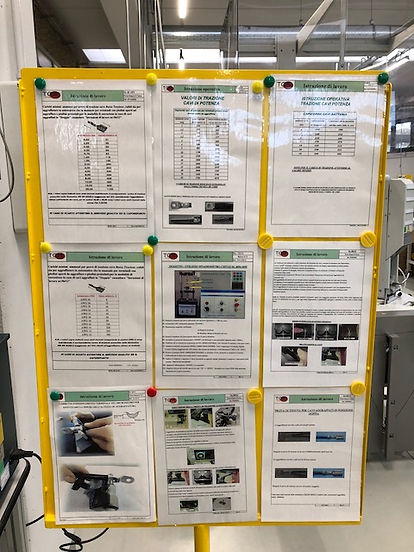
Displaying defects: images speak louder than words.
5S (Sort, Set in Order, Shine/Sweeping, Standardise, Sustain): the optimisation of spaces, the creation of new ones, a clean and tidy environment is a safe and more productive space.
Genchi genbutsu: line managers and directors are involved in the field.
Team Work: the team is everything, only group that rows in the same direction can get the boat across the finishing line.
The brands and trademarks shown on this page remain the property of the respective companies and any reproduction is prohibited.